Does PR Generate Leads?

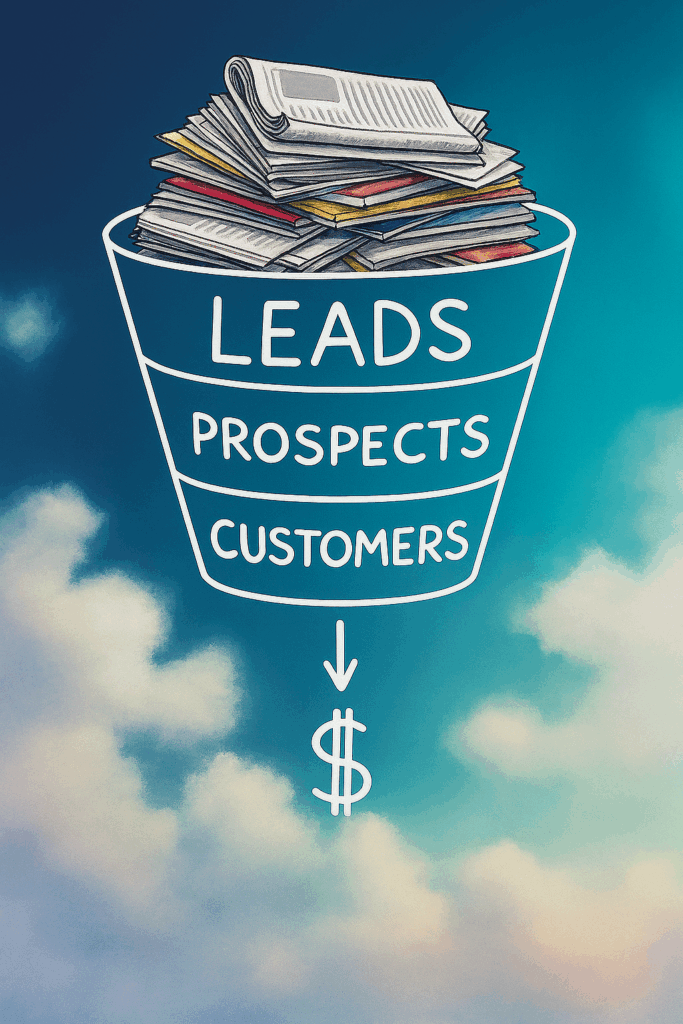
Recently, a client asked me: Will PR generate leads?

The short answer is, yes! A public relations campaign can help individuals and organizations increase visibility and establish themselves as recognized experts, while also generating leads.

But does every prospect see every newspaper, magazine, blog, podcast, panel, presentation, or event you are featured in? The answer is, probably not.

That’s why we need to reach them wherever they are. And we do that through promotion of our own press.

If you’ve appeared in an article, program, or podcast, there is more we need to do.

In today’s post, I’ll share the exact strategies I’ve used myself, and on behalf of my clients, to successfully generate real leads and sales from PR.

The First Step in the Sales Lifecycle

PR and strategic communications increase your visibility and introduce you to possible clients, partners, and communities.

The best part? Letting the media tell your story and position you as the expert without you having to say it yourself.

This is an important first step, since people must hear about you, and trust you, before they buy from you.

Get featured in a top-tier national newspaper or on a high-visibility podcast, and you get instant credibility.

Rinse and repeat enough times, and you become a leading provider in your industry.

What to Do Next

Once you have a few published placements, how do we increase leads?

The following is a list of forums that likely already exist in your day-to-day, and can be massively effective for business reach. Your next step? Start promoting your coverage immediately in the following forums:

  • Social Media: Post the coverage on all of your social channels! Sharing press coverage on social platforms extends its visibility and credibility to your professional network and potential customers. A well-crafted post with context or a personal takeaway makes the mention feel authentic and sparks engagement, turning media wins into conversations.
  • Personal or Company Blog: Republishing your press mention on a blog allows you to expand on the story with your own insights. This not only boosts SEO value but also positions your brand as an active thought leader.
  • Newsletter: Including PR mentions in your company newsletter reminds your audience of your growing credibility while keeping subscribers informed and engaged. It transforms earned media into content for your audience, communicating that you are a leader in the field.
  • Proposals, Presentations, and Other Business Development Communications: Adding “As Seen In” logos, headlines, or pull quotes to client-facing materials instantly strengthens your authority. When competing for business, these third-party validations can be a differentiator that tips a decision in your favor.
  • Press Page: A dedicated press page serves as a centralized library of your media mentions, giving journalists, clients, and investors an easy place to see your credibility. It signals transparency and momentum, showing that your story is continually being recognized.

And a few other (unexpected) places to include it:

  • Email Signature: Your email signature is seen dozens (if not hundreds) of times per week by prospects, clients, and partners, making it prime real estate for promoting press mentions. A simple “In The News” link or banner subtly reinforces credibility with every message you send. Over time, this repetition builds trust without feeling promotional.
  • Email Marketing Campaigns: Incorporating press mentions into dedicated or ongoing email campaigns extends their reach well beyond the initial publication. Highlighting coverage in newsletters, nurture sequences, or special announcement blasts reminds subscribers that third parties recognize your expertise. This adds social proof to your marketing, making your offers more persuasive.
  • Cold Outreach: This tactic is a powerful way to secure new business. Referencing media coverage in cold emails or LinkedIn outreach can instantly elevate your credibility with prospects who don’t yet know you. A line like “We were recently featured in [Publication] for our work in…” positions you as vetted by a trusted third party. It lowers skepticism and makes prospects more likely to engage with your message.

There you have it. Utilize all these forums regularly for a month and let us know what kind of results you are getting.

Keep The Momentum Going

With every new media placement, feature story, speaking engagement, or other accolade comes an opportunity to connect.

But in addition to business leads: focus on media leads as well.

Conduct regular outreach to editors, writers, and influencers in your space to keep a pipeline of opportunities coming your way.

Take the next step by promoting your PR results through the channels outlined here to maximize your visibility and generate real leads.


What Is The Role Of AI In PR?

I read in the news today about a foreign PR firm selling a strange new tool which provides AI-generated responses to reporters seeking expert commentary.

It brought up the critical question that faces PR professionals today: can we use AI and if so, how?

Go ahead and run your next sales presentation, marketing document, or blog post through ChatGPT or Claude’s capable virtual hands to make it longer, shorter, or to clean it up.

However, while AI has numerous positive applications, utilizing it to answer journalists’ questions and requests for commentary is both unethical and detrimental to everyone involved.

Here are the three biggest reasons why PR companies and professionals should avoid using AI to generate responses for reporters:

  • First, inaccurate or missing-the-mark commentary can harm you. We don’t know if a quote generated by Al is true, false, ridiculous, or lacking context that Al might have missed. True industry experts have strong, original opinions and ideas. Those who are serious about thought leadership aren’t going to want an Al tool answering hard questions for them.
  • Second, it harms relationships with journalists. Oftentimes, journalists can tell if an answer is AI-generated (hello, too many emdashes and metaphors like elevating such-and-such to new heights). Journalists rely on expert sources to deliver honest insights from the front lines of the industry they are covering. If they get wind that you used Al to create an answer, chances are you will be quietly banned from their publication and possibly others.
  • Third, it harms our understanding of the world. Journalism helps us understand our industry and communities better. We make decisions based on what is happening in the news, from the economy and politics to the job and housing markets and more. Misinformation undermines quality journalism and ultimately hinders our understanding of critical issues.

In short: don’t submit unoriginal commentary to a journalist or publication created by an Al tool under the auspices of being from yourself or another human.

AI is a powerful tool, but there is no substitute for a human’s perspective. Think of it this way: what will be more interesting, hearing about a friend’s personal travels to Japan, or reading about Japan off the web? A bot scraping the web for content isn’t even going to come close in terms of providing true insights, personal stories, or wisdom from the front lines.

Most importantly, talking to reporters is a golden opportunity to share the deep knowledge, skills and insights you bring to the table. Why not make the most of it?

How to Generate Buzz When You Have No “News”

Public relations often hinges on newsworthiness—new projects, service offerings, product launches, funding rounds, big hires, or viral campaigns. But what if you don’t have any major news announcements?

In today’s post, I’ll share how to generate attention for yourself and your brand even when there’s no hard news to pitch—and keep you and your brand in the media limelight.

Leverage Thought Leadership

When it comes to thought leadership, you are the story. Thought leadership builds trust, positions you as an authority in your field, and keeps your brand relevant, even when you have no traditional news to share. Here are a few of the simplest, most effective ways to build thought leadership:

Write guest articles or op-eds: Share your perspective on trends, industry challenges, or lessons learned. Publications are always looking for credible expert voices.

Participate in podcast interviews: Hosts are often searching for fresh guests. Share your story, your mission, and actionable advice.

Voice your perspective consistently: Whether it’s LinkedIn, a business blog, or newsletter, reflect on your journey, share behind-the-scenes of your work, and offer helpful insights that truly help your clients and community.

Turn Your Process Into Content

Regardless of your industry or role, your philosophy and approach to your work are unique assets you bring to the table. Turn your insights into compelling content that answers common questions and gives customers value. Here are some examples to start with:

  • “How To Skyrocket Your Success in [Your Industry]”
  • “Key Considerations for Hiring a [Your Role/Industry] in 2025”
  • “Top 3 Mistakes [Your Client Type] Makes When [Problem You Solve]”

Customize these ideas for your industry to make them optimally appealing to your target audiences. These can also serve as lead magnet ideas to convert website visitors into an email list.

Jump on Trending Topics (Thoughtfully)

If there’s a relevant news story, trend, or cultural moment in your industry, offer your take, whether it’s in the form of a blog post or a quote for a journalist. You may also proactively reach out to relevant media to offer your insights. Some ideas:

  • Reach out to relevant journalists covering these types of topics/trends in your industry, offering your perspective for any articles they are working on.
  • Use tools like HARO and Featured to find daily opportunities.
  • Share your insights on this timely topic with your audience, whether LinkedIn, a company blog, or another social platform.

Create Your Own Media

Recently, I worked with a group in the construction industry whose work was fascinating—though to them it seemed ordinary, and they struggled with marketing in general as a result.

After I met with them, they were surprised to learn that they already had more than enough material such as arresting images (views from tops of buildings!) and behind-the-scenes insights to create content that would attract prospective clients and partners, and provide value to the industry.

This may be true for you as well.

Start here: What part of your job or industry is most interesting or surprising?

Bonus tip: Identify areas that would help a customer make a decision about working with you. Some ideas might include:

  • Host a live Q&A or webinar.
  • Launch a behind-the-scenes video series.
  • Interview other industry leaders on your blog or social channels.
  • Start a newsletter with your take on what’s happening in your space.

These are controllable platforms that showcase your expertise, personality, and value.

Showcase Your Clients’ Wins

How have you helped customers? What has your product or service done to make their work and life better? Create content around client wins to showcase your value and what others can expect when they work with you. Try these ideas:

  • Share customer success stories and testimonials on your website to showcase your brand’s credibility and build trust.
  • Interview clients for your newsletter or social media content with a “before and after” appeal.
  • Create content, such as an interview series, interviewing successful clients and showcasing their wins.

This not only generates goodwill but also increases your credibility and shares your clients’ success stories with the world.

Position Yourself as a Resource

One of my favorite clients, an attorney, loves answering questions about their industry; they would do it all day long if they had time! Luckily, you don’t have to do it all day long to be effective. Sharing insights enthusiastically shows a deep amount of knowledge and goodwill. You can:

  • Answer common questions in your industry.
  • Post “how-to” tips on social media.
  • Create downloadable checklists or templates to help with common issues.

Some people have built entire channels using this advice. This tactic alone may build credibility, trust, and a steady stream of interest.

Consistency is Critical

Even when there’s no “news,” you are the news. The value you add, the education and inspiration you provide, and the solutions you can offer are what builds real, lasting “buzz” for a brand.

Have you tried any of these tactics? Let me know in the comments!

Why PR Is About Strategy and Storytelling—Not Just Reporter Relationships

Public relations has long been misunderstood as a game of who-you-know. For decades, the image of the well-connected publicist calling up their favorite journalist to “get a story placed” defined how people, both inside and outside the industry, viewed PR. But in today’s media and attention economy, relationships alone are not enough. At its core, effective public relations is about strategy and storytelling, not simply maintaining a contact list.

The Limitations of Relationship-Based PR

Of course, having strong media relationships can open doors. A reporter is more likely to read your pitch or return your call if you’ve built trust over time. But relationships do not guarantee placement, especially in an era when editorial standards are high and journalists are overwhelmed with dozens of pitches each day. Reporters are accountable to their editors, their audiences, and increasingly, analytics. They care about relevance, angles, and evidence, not who sent the email.

The truth is, no matter how friendly you are with a journalist, they won’t cover a weak story. A reporter relationship might get your pitch read, but it won’t get your story told unless it’s compelling, timely, and strategically positioned within the broader news cycle. In this way, relationships are a tactic, not a strategy.

Strategy: The Foundation of Effective PR

Public relations is ultimately a strategic discipline, rooted in business goals and reputation management. A successful PR campaign doesn’t start with an email to a journalist—it starts with a deep understanding of the client’s objectives, audience insights, market dynamics, and the cultural moment. Strategy determines why we’re communicating, who we’re trying to reach, what we’re trying to achieve, and how we’ll measure success.

Whether it’s shaping a thought leadership platform, managing a crisis, launching a product, or repositioning a brand, PR practitioners must think like strategists: aligning communications with long-term vision and business value. Without strategy, PR becomes reactive, fragmented, and ineffective—even with the best media contacts.

Storytelling: The Engine That Drives Attention

If strategy is the roadmap, storytelling is the engine that drives results. People don’t remember taglines or boilerplates—they remember stories. In a crowded, skeptical, and fast-moving media environment, the most powerful way to build connection and credibility is through narrative. This means finding the emotional hook, the human impact, the unexpected angle—something that resonates beyond jargon or corporate messaging.

Great PR professionals act as translators. They take complex or technical information and turn it into narratives that are accessible, relevant, and shareable. They frame company milestones not as press releases, but as moments in a larger story. And they do so not just for media, but for employees, investors, partners, and communities.

In this sense, storytelling is not a soft skill; it’s a strategic asset. The right story can shape public perception, attract talent, influence policy, and drive growth. And in a world increasingly shaped by narrative—across social platforms, podcasts, newsletters, and digital outlets—storytelling is no longer optional. Do it, or risk getting left behind.

Utilizing PR For Business Results

Today’s most effective PR professionals are not just media go-betweens. They are strategic advisors, brand architects, cultural analysts, and narrative builders. They understand not only how to get a story placed but also why it matters, what it means for the brand, and how it will resonate with the audience. They work hand-in-hand with executives, marketers, legal teams, and creatives to make communications not just visible, but meaningful.

As the media landscape continues to evolve, this shift from “who you know” to “what you say and why” will only become more critical. PR is no longer just about getting into the news. It’s about earning attention by delivering clarity, credibility, and connection through smart strategy and compelling storytelling. When done well, PR can yield significant business results.

How to connect with journalists: my three favorite (free) tools for top-tier media opportunities

Are you interested in getting more meaningful PR opportunities for yourself or your clients, including major national outlets?

In today’s post, I’ll share my top three favorite platforms that beginners and experts alike may use to connect with journalists quickly and easily.

While there’s no substitute for the traditional PR process—creating the ideal pitch, researching publications and reporters, conducting outreach effectively, and positioning stories and content for positive business results—it can take significant time.

Using tools that connect journalists and expert sources just makes sense for quick PR wins. In contrast to pitching a brand new story that has to pass muster with the publication, opportunities derived from these tools are relatively easy wins because the story is already being written.

My favorite three PR opportunity platforms

Founded in 2007 by Peter Shankman, Help a Reporter Out (HARO) was once every PR pro’s can’t-miss-it, thrice-daily roundup of opportunities, but after being acquired by Cision, it was shut down. The disappearance of a tool that once connected media and the public relations industry left a significant void.

Luckily, a few similar concepts to HARO have emerged in recent years. I’m excited to share my favorite three tools for connecting with journalists:

  1. Qwoted: This easy-to-use platform offers a daily deluge of opportunities from top-tier media outlets, trade press, brand blogs, and independent media on a wide variety of topics. You will need to sign up from a business email (no Gmail sign-ups allowed) and get three (3) pitches per month, and while there is no guaranteed response, you do learn if the reporter opened your message. If the reporter replies, you may continue the conversation in-platform or migrate to email or phone communication. Either way, we love Qwoted for its user-friendliness and mix of opportunities, including top-tier, for various industries.
With opportunities like The New York Times, Travel & Leisure, Parade, Lifehacker, and Quartz, Qwoted is worth a look.
  • Featured: Another media lead source that I recommend checking daily for opportunities is Featured. It’s easy to use and offers up to three (3) free pitches per month. One thing to note is that the platform is set up to submit commentary directly, bypassing the querying stage entirely, and instead simply submitting the answer to the question. I often recommend the site because of the types of opportunities that don’t appear anywhere else. Featured announced this week, as I was about to hit “publish” on this very post, that they’ll be acquiring HARO, the free daily listing of opportunities. You may sign up for that at https://www.helpareporter.com.
From Fast Company to GoDaddy, Featured offers a blend of well-known media and company blogs that offer domain authority
  • Help Every Reporter Out (HERO): After the shutdown of HARO, its founder launched this new, free daily newsletter offering opportunities with national news and trade media and company blogs, and is easily the most straightforward way to scan for PR opportunities. One major benefit of this newsletter is that you get the journalist’s contact information, so you can reach out to them directly. If you’re interested in being included in media stories as an expert, or helping clients get more media coverage to reach their target audiences, this newsletter really is the most no-brainer sign-up you’ll do today. You may do so here: https://sourceofsources.com.
Washington Post, USA Today, and other publications make this a must-read newsletter like the original HARO.

How to secure opportunities

Because journalists constantly post new stories and deadlines can require quick turnarounds, we recommend signing up with these platforms and scanning each of them daily for opportunities that may be right for you and your clients.

A consistent approach and strong, expert answers will ensure you get included in the articles you are pitching.

You can use the articles you are featured in for marketing and business development and to generate new leads.

Being featured on high-visibility media outlets and blogs will not only increase your credibility in the marketplace but will also help you become your industry’s known expert.

What can you expect from PR?

At a recent new client kick-off meeting, I asked the company what results they got with their last PR firm since I hadn’t found anything in my research.

It was a curious situation, seeing as this client does impactful work and has global offices. They responded that they’d had coverage in a handful of small, niche publications that don’t pertain to their target audiences. 

Upon closer review, the “coverage” was simply a press release picked up on a handful of irrelevant websites. How could an organization work with several PR firms and get zero meaningful results? Yet, business owners often tell me this is not unusual.

I won’t let that happen to you. In today’s post, I want to share what you can and should expect from a PR partner:

1. Regular publicity opportunities

Media coverage is the cornerstone of any PR program. Your PR representative should regularly deliver opportunities to be interviewed by journalists and content creators on stories germane to your industry. Additionally, they should provide thought leadership opportunities, such as contributing an article, hosting or being a guest on a program, writing a book, delivering a talk, or keynoting an event, with tangible results that appear publicly across the web and prominently amongst your target audiences.

2. Messaging and positioning advisory

Articulating and fine-tuning the client’s brand values and messages is a critical component of any PR program. Whether you’re interviewed for one minute or one hour or talking to a potential client or investor, the messaging process will help you deliver key information about your business and offerings in an easy-to-digest and compelling manner. This process will also help you figure out your interview strategy, as opposed to delivering “reactionary” answers.

3. Business development and lead generation

Positive visibility and exposure for your brand are fundamentally good for business development. Some clients become the most famous providers in their industry with many high-visibility press mentions and speaking engagements; others need to be on the right podcasts and programs with longer-form opportunities to appeal to their target audiences. The right PR team will work collaboratively with the client’s team to utilize PR for business development and lead generation.

If your PR person does not provide all three of the above deliverables, you should find someone who will.

As for the client who had no results with other providers, we secured significant media opportunities for them within the first month.

Regardless of your industry, what stage your business is in, or what has happened in the past, an effective PR team should be able to help you with the abovementioned issues—and take your business and brand to the next level.

What It’s Like To Be a Normal Person on National TV

Getting to be on this excellent program was a highlight of 2024.

Most PR people spend time securing opportunities for their clients, but recently, I was asked to appear on The Drew Barrymore Show to model some holiday fashions myself. 

With recent guests like Ariana Grande, Gwyneth Paltrow, U.S. Surgeon General Vivek H. Murthy, Ms. Rachel, and Martha Stewart, it was immediately apparent that I would be among peers.

Kidding. These people are some of the biggest celebs in the world. So, how did I get to be a part of it?

How I Got the Opportunity

With over a million viewers per episode, The Drew Barrymore Show is the third most-watched syndicated talk show in the US and an excellent opportunity to get known.

While most of the opportunities I generate for PR clients come through pitching activities, in this case, I connected with the producer through my local NYC neighborhood Facebook group.

Initially, the producer sought someone for a hair-makeover-themed episode. While she picked someone else for that opportunity, she circled back a few months later to see if I was interested in modeling some holiday fashions. There was only one answer to that question!

To be considered, I had to submit a short video describing my favorite holiday looks, along with my clothing and shoe size, height, marital status, and profession.

They needed the video quickly, so I filmed a short monologue while pushing a stroller up a hill, waxing poetic about my favorite holiday looks, which included the fabric velvet. 

The video wasn’t perfect, but it reflected my personality, and I made sure to answer the exact questions they asked.

Please note: I dropped everything to answer these questions as soon as I received the message. This is super important if you plan to participate in a similar opportunity. Time is of the essence when it comes to responding to producers.

The Fitting

Audience members cue up on filming day.

When I learned they picked me, I was excited.

It had been over a decade since I was last on television myself, and knowing the current industry practices is essential for a PR person.

Furthermore, my family had recently moved over the summer, and I had dispensed with old holiday clothing; so a new outfit for the season was just what I needed.

A week prior to filming, I arrived at CBS’s 57th Street studios to try on five on-trend holiday looks.

The episode’s theme would focus on holiday looks under $75, selected by the incredible Kristina Zias.

Because I had provided my measurements, the dressing room was pre-filled with clothes that fit me perfectly.

The in-house stylist, Hodaly, did a fantastic job helping me try on each look and style them with jewelry and accessories.

My favorite outfits were an Express velvet off-the-shoulder top with an H&M black skirt and polka-dot tights; and another look that featured Zara washed-out-black, wide-leg jeans with a faint pinstripe and a velvet crystal blazer. Both looks featured affordable chunky faux-silver rings and earrings from Amazon.

One of the producers thought the blazer and jeans combo would be the winning look, and I learned that Drew herself would review the pictures and pick the winning look herself. I was excited to learn which look she liked best.

(It was also nice to know that I would have a holiday-ready outfit and no need to dig through boxes in my basement.)

Filming day

On filming day, I arrived back at CBS’s studios early and was ushered into my very own dressing room. 

The other participants, Sylvia and Lisette, had their fabulous holiday outfits on: Sylvia wore a gorgeous red ensemble, while Lisette had a brilliant gold sequin skirt. As for me, I learned Drew went with the velvet top and skirt ensemble, after all!

As I sat in Hair and Makeup chatting with the other participants, it got me thinking about how much I admire Drew Barrymore.

Of course, I remembered seeing her in E.T., which our family had on VHS in the 80s. I also watched her in Batman Forever, Mad Love, Scream, The Wedding Singer, and other iconic movies. I recalled reading her memoirs, which detailed her troubled childhood and rise in Hollywood. Today, she has a leading talk show with some of the best content and guests anywhere. She was someone I truly respected and admired—who has a talent for creating amazing content, and PR as well.

This wasn’t just a TV appearance; being a part of this show felt like collaborating with a friend, a continuation of chapters of my own life.

It’s Showtime

Now, we were backstage with the production crew, waiting for our turn to be called out on stage.

It was a stage I had seen hundreds of times over the past few years watching the show. Now, I would be on it.

I could hear the hosts’ banter clearly, along with audience applause. After Sylvia walked out confidently, I realized I was next.

I heard Valerie Bertinelli call my name (!). I made my way into the spotlight as the audience clapped.

As I had been instructed, I walked straight over to Drew, Valerie, a fashion influencer named Kristina Zias, and a stylist named Ross Matthews. They were welcoming and gave me the confidence to have fun with this.

I looked across the audience and smiled, and tried to relax as the world’s brightest spotlights blasted on me. 

Valerie and Drew peppered me with fun questions about my outfit and how I felt, and Kristina shared more details about the clothing and look.

After a few minutes of banter, I truly felt awesome. As the fashion segment wrapped, we returned to the stage, and Drew hugged us. 

The whole experience was enjoyable and worthwhile. I would recommend participating to anyone.

To top it off, we each received a $1k gift card to Universal Standard, an inclusive fashion brand, and got to keep the beautiful outfit.

Some opportunities can help you promote your product or service offerings. In this case, they wanted a “normal person” to model some clothes. I would recommend taking advantage of either opportunity if you can get it!

After filming was complete, I stepped out of the CBS studio in my street clothes and a full face of makeup, feeling energized and excited by my day on TV.

A few weeks later, the show aired! You can check out the segment I’m featured in here.

How You Can Do It

Are you interested in being on TV to promote your business or yourself?

Here are my tips on getting featured on TV, whether as a guest or talking about yourself or your business.

  1. Connect with producers. Producers are often the decision-makers when it comes to major national television shows. Prepare a summary of what you can and want to talk about, relevant to the current news cycle, and reach out. You can also aim to participate in an already-decided-upon show theme, for which producers often extend opportunities to members of the public.
  2. Preparation is critical. Watch the television show you are going to be on! In this case, I had seen hundreds of viral clips from the show, and I went back and watched several full episodes before even considering being part of it. Know the format, personality of the hosts, and type of questions you will be asked. You can ask the producer for this information and think about/practice your answers in advance.
  3. Have fun with it! National television shows get a lot of viewers, and this can make one nervous. However, everyone is there to have fun and hopefully learn about you as well. The more you have fun with it, the more that will show up on camera and be picked up by others in the show. 
  4. Share your appearance widely. Being on TV is work. It’s a long day, and a lot of hours standing, sitting and preparing. But it’s incredibly fun as well. Post your appearance on LinkedIn, your blog, in your newsletter, and across other social media. Leverage the positive results to talk about what you do.

Should I Use a Press Release Distribution Service? How to Boost Your Business Visibility in 2024

Recently, a PR colleague asked me an interesting question: “Should I pay for a press release service?”

She was trying to promote her entertainment industry client, whose latest work wasn’t getting much attention.

“What do you hope the press release service will accomplish?” I asked.

She expressed sincere concern about getting the client top-tier media coverage and the recognition and commercial success they deserve.

We can all relate to this sense of urgency, wanting our own (or clients’) work and success stories to become famous and break the internet.

This is where a paid newswire service seems like a possible solution, promising an immediate or semi-immediate publication of your news.

But will it truly help you reach your goals?

First, let’s discuss what a press release distribution service does.

What does a press release distribution service do?

PR Newswire, a popular press release distribution service.

A press release distribution service publishes your announcement (written by you or a publicist you hire) on its website and distributes it to news networks.

Press release distribution services will pretty much publish anything within broad guidelines, i.e. anything legitimately business related and nothing below board.

Typical announcements that companies deem worthy of an investment, which can cost as much as $1,000 or more per announcement, can vary significantly.

Your press release can announce significant business news, a small update, or anything in between.

Whether about a new product or service, a round of funding, strategic partnership, or such hard-hitting journalism as a leading soda brand claiming that Mountain Time is their Official, Unofficial Time Zone, there is a press release distribution site that will publish it.

At the end of the day, you can expect your press release to be posted on their site, and will likely get picked up by other sites as well.

Some releases I have issued on behalf of my clients have landed on Wall Street Journal, Business Insider, Associated Press and Yahoo News and other seemingly top-tier media sites.

The caveat is that the releases appear in a “sponsored” section on the site, which is the Siberia of journalism.

The biggest problem with press release distribution services

This is what press release distribution services don’t tell you:

You could pay thousands for a press release distribution package, and your releases still wouldn’t (couldn’t) be found organically by the average reader on the site.

They “live” on some authentic media sites but do not appear when a visitor goes to the site.

You can technically say you were featured on the site, but it is no different than placing an ad, except an ad would ostensibly reach actual humans. The pages that house the press releases are different than the editorial, or real news, section.

Do journalists care about press release distribution services?

The other problem is, do these sites reach human journalists—and do they care?

Many services promise that your news will get delivered to journalists covering your industry. I set out to verify this claim.

After speaking with a journalist from a top-tier publication to verify this claim, what they said surprised me:

“Yes, I review an email of headlines and email from them periodically, that has a bunch of news releases in it.”

However, the journalist continued, “Can’t say I read it thoroughly. But I do search announcements sometimes to see what a company said about such and such.”

This means that your news does have a chance of getting in front of journalist contacts, however, it is important to note the context of how your release lands in front of the journalist.

While technically the reporter’s “industry,” this laundry list of headlines are largely irrelevant to this journalist’s actual beat.

The short answer is yes, some of these services deliver on their promise to get your press release in front of journalists.

But if you received this list above, would you have the time and energy (and eyesight) to go through it?

For a limited budget, is a PR campaign or a press release distribution service more effective?

When executed properly, a PR campaign will promote and publicize your brand across print, digital, and mobile media and can positively impact your bottom line.

Journalists will interview and publish stories and content about you and your brand. This positive information will make you rise to the top in searches and become your industry’s go-to provider and leading expert.

A press release distribution service will simply publish the document you provide them and circulate it to various “news” sites, but it is unlikely to be seen by actual humans.

The only way people can see it is if they are looking for it specifically. This fact makes it difficult for potential clients, partners, investors, and stakeholders to find your press release.

When should I use a press release distribution service?

Despite my critical viewpoint, there are still times when a press release distribution service can be useful in a PR campaign.

Here are the two reasons I would recommend a press release distribution service:

  • If the announcement isn’t newsworthy in the traditional sense—like a major transaction, product launch, partnership, or other significant business event—or journalists have already passed on it, you might still want or need to publish the information.
  • If there is a legal mandate to publish your release. Some publicly traded companies may be required to publish a release as part of Regulation Fair Disclosure. Using a press release distribution service is a way to satisfy these requirements.

Which press release distribution services would you recommend?

BusinessWire, another popular press release distribution service.

I generally don’t recommend utilizing a press release distribution service unless my client falls into one of the above categories.

If you fall into this category, there are plenty of press release distribution services. I’ve compiled a list of the nine most popular ones below:

  1. PR Newswire: Blue-chip brands like Microsoft, Google Cloud, and Visa all distribute press releases using PR Newswire, making it one of the go-to options for corporate press release distribution. I’ve used this service countless times throughout my career: it’s expensive, and its salespeople are high-pressure. However, it does work well for a press release distribution service. While they don’t publicly disclose pricing, in my experience, a single press release will start at around $1,000 ($805 for the release and a $195 membership fee) and more for additional word count and images.
  2. Business Wire: Toshiba, Accenture, and Citibank UK utilize this financial services-focused option, which bills itself as “distribution for PR and IR professionals” and “the global leader in press release distribution and regulatory disclosure.” Pricing starts at around $950 per release.
  3. GlobeNewswire: Promises to “reach global audiences, monitor brand sentiment, send press releases, secure media coverage, and measure success.” It starts at $195 per release.
  4. PRWeb: This low-cost cousin of PR Newswire will “leverage the industry’s leading, most sourced press release distribution network in the world.” I’ve used PR Web many times over the years. It’s simple to use and affordable, starting at $110 a release.
  5. Newswire: Promises to reach thousands of online, local, regional, national, international, and industry media outlets, starting at $349 a release.
  6. EIN Presswire: Calls itself “the world’s leading press release distribution service; reach millions with one click.” Starts at $99.95 per release.
  7. 24-7 Press Release: States “24-7 Press Release Newswire has been in business for over 18 years,” and “we post news for include major hotels (Holiday Inn, Hampton & Fairfield Inn & Suites), Church’s Chicken, Fishbowl, and NASA to name a few.” Starts at $49 per release.
  8. PR.com: They say, “Over 250,000 companies, both big and small, have trusted PR.com to help grow their business. ” It reaches “thousands of media outlets, journalists, influencers and websites; social media; major news outlets’ newsrooms; plus more.” It starts at $60 per release.
  9. PRLog offers free press release and press room hosting and free search engine distribution. If you believe you get what you pay for, an upgrade to distribute with PR Newswire is available for $339, which seems like a decent deal. Posting a single release is free.

In short, there is a time and a place for a press release distribution service.

Some PR firms encourage their clients to utilize press release distribution services every time the wind blows because they may count these placements as pickups. They justify this as being “good for SEO.”

I never count press release distribution services as placements. And SEO will improve when reputable news sites include you and your brand in their content—far more than flooding the web with press releases ever would.

Summary

What did I tell my colleague who wanted to know if she should try the press release distribution for her entertainment industry client?

Here’s my take: Her client had enough clout to secure top-tier media coverage without using any distribution service. She had to put in the time and hard work of researching and pitching appropriate writers, editors, and outlets. I gave her a few angles, which I felt were compelling enough to secure a significant feature story and television interview.

She was also interested in trying a press release distribution service, so I gave her a contact to try one of the above services for free (the company had sent me an offer). I will report back soon with the results of both efforts.

In summary, I recommend focusing on a PR campaign that includes media opportunities to boost your business visibility and reach your target audience. The occasional press release distribution service can supplement these efforts.

How to Write a Press Release That Gets Results in 2024: 10 Expert Tips

Did you know that journalists receive an average of 50 press releases a week and spend less than one minute reading them? If you’ve ever felt like your carefully penned announcements are disappearing into the void, you’re not alone.

In this guide, we’ll unlock ten critical factors to consider when writing a press release that will maximize your chances of getting featured in the media.

Let’s jump in:

1. Craft an Attention-Grabbing Headline

Your headline is your first (and sometimes only) chance to make an impression. In the fast-paced world of journalism, you’ve got seconds to pique a reporter’s interest. Here’s how to make those seconds count:

  • Incorporate numbers or statistics: “Company X Increases Revenue by 200%” is more eye-catching than a vague statement about growth.
  • Keep it concise: Aim for under 70 characters. Remember, many email subject lines are cut off after this point.
  • Include your target keyword naturally: This helps with SEO and immediately tells the reader what your press release is about.

Your headline should be a teaser, not a novel. It should make the reader think, “I need to know more about this!”

2. Nail Your Lead Paragraph

You’ve got their attention with your headline – now it’s time to reel them in with your lead paragraph. This is where you answer the crucial “5 W’s and H” (Who, What, When, Where, Why, and How). Here’s how to make your lead irresistible:

  • Start with the most newsworthy aspect: Don’t bury the lead! Put your most exciting and essential information right at the top.
  • Use the inverted pyramid structure: Begin with the most crucial information and provide supporting details as the release progresses.
  • Keep it concise: Aim for 25 words or less. If you can’t explain your news in a tweet, you might need to refine your message.

A strong lead paragraph might look something like this:

“Tech startup InnovateCo unveiled its groundbreaking AI-powered personal assistant, ‘Zephyr,’ on Monday, promising to revolutionize daily task management for busy professionals worldwide.”

3. Structure Your Press Release for Readability

In today’s fast-paced media environment, your press release needs to be scannable. Journalists often decide whether to pursue a story based on a quick skim. Here’s how to make your release easy on the eyes:

  • Use short paragraphs and sentences: Aim for 2-3 sentences per paragraph. This improves readability and makes your release less daunting.
  • Include subheadings: Break up long blocks of text with descriptive subheadings. This helps guide the reader through your release.
  • Utilize bullet points: Great for listing features, benefits, or related points.

A well-structured press release is not only easier to read but also more likely to be read in full.

4. Include Compelling Quotes and Data

Nothing adds credibility to your press release like well-chosen quotes and hard data. Here’s how to use them effectively:

  • Add quotes from key stakeholders: This could be your CEO, project lead, or even satisfied customers. Make sure the quotes add value and aren’t just fluff.
  • Back up claims with statistics: If you say your product is “revolutionary,” prove it with numbers.
  • Use infographics or charts: These can make complex data more digestible and shareable.

A good quote might look like this:

“Zephyr isn’t just another digital assistant – it’s a paradigm shift in how we manage our daily lives,” said Jane Doe, CEO of InnovateCo. “Our early adopters are reporting a 40% increase in productivity within the first month of use.”

5. Optimize for SEO and Digital Distribution

In 2024, your press release needs to work hard for you online. Here’s how to optimize for both human readers and search engine crawlers:

  • Include relevant keywords: Use your main keyword in the headline, lead paragraph, and sprinkled naturally throughout the body.
  • Add multimedia elements: Images, videos, or infographics can make your release more engaging and shareable.
  • Use hyperlinks: Link to your website’s relevant pages or supporting resources.

Remember, while SEO is important, your primary audience is still human journalists. Don’t sacrifice readability for keyword stuffing.

6. Craft a Powerful Boilerplate

Your boilerplate is your company’s elevator pitch. It’s typically placed at the end of the press release and should succinctly summarize who you are and what you do. Here’s how to nail it:

  • Summarize your mission: What problem does your company solve? What’s your unique value proposition?
  • Highlight key achievements: Have you won awards? Reached significant milestones? Briefly mention them.
  • Include a call-to-action: Direct readers to your website or social media for more information.

Here’s an example:

“About InnovateCo: Founded in 2020, InnovateCo is at the forefront of AI-powered productivity solutions. Our flagship product, Zephyr, has helped over 1 million professionals reclaim their time and boost productivity. Recognized as a ‘Top 10 Tech Startup to Watch’ by TechCrunch, we’re on a mission to revolutionize how the world works. Learn more at www.innovateco.com.”

7. Provide Clear Contact Information

Make it easy for journalists to follow up with you. Here’s what to include:

  • Name, phone number, and email of the media contact: This should be someone who can answer questions about the release.
  • Social media handles: Some journalists prefer to reach out via Twitter or LinkedIn.
  • Availability: Be mindful of time zones and which contact information to use as you set up a meeting with the journalist. There is nothing more stressful than struggling to find a link or phone number one minute before the big interview!

Pro tip: Suggest several availabilities as soon as a journalist expresses interest, so the journalist can simply pick a time (and you can avoid the back-and-forth of scheduling).

8. Time Your Release for Maximum Impact

Timing can make or break your press release. Here’s how to get it right:

  • Research optimal times: Generally, Tuesday through Thursday mornings are good for B2B news. But this can vary by industry, so consider what makes the most sense for your audience.
  • Consider embargoes: For major announcements, you might want to give journalists, or a specific journalist/outlet, advance notice under embargo.
  • Avoid dead zones: Unless it’s breaking news, avoid releasing on Friday afternoons, major holidays, or during typically slow news periods.

The goal is to release your news when journalists are most likely to be receptive and have time to follow up.

9. Distribute Through the Right Channels

Writing a great press release is only half the battle – you need to get it in front of the right eyes. Here’s how:

  • Kick off your campaign by reaching out: Direct outreach via email and phone is the best way to get journalists’ attention. Paid services like PR Newswire can be helpful in creating a permanent link to your news that appears on Google and other websites, but it’s no substitute for one-on-one outreach.
  • Target industry-specific outlets: A niche publication might be more interested in your news than a general news site.
  • Build relationships with journalists: Over time, develop a list of journalists who cover your industry. Personalized pitches can be very effective.

Pro tip: Create a media list and segment it by beat, publication type, and past interest in your company. This allows for more targeted distribution.

10. Follow Up and Measure Results

Your work isn’t done once you hit “send.” Here’s how to maximize the impact of your release:

  • Take note of interest: Once your press release is distributed—if you’ve followed the steps in this guide—you are likely going to have journalists interested in your news. For each opportunity, you want to understand each reporter’s deadline as well as intentions for the story. (For example, is it a feature about you, a round-up of businesses similar to yours, or part of a larger trend story?) Then, schedule the interview!
  • Track key metrics: If you can monitor open rates and click-throughs, this can be useful in determining who to follow up with. If a journalist opened your email multiple times but didn’t respond a gentle follow-up might be appropriate.
  • Identify coverage: Outlets may run your news straight away. Tools like Google Alerts can help you track mentions. Keep track of all mentions and take note of any issues that need to be corrected. Of course, promote your positive coverage.

Summary

Writing a press release that gets picked up isn’t rocket science, but it does require a strategic approach and a dash of creativity. The key is to think like a journalist – what would make you want to cover this story?

By crafting attention-grabbing headlines, nailing your lead paragraph, structuring for readability, including compelling quotes and data, optimizing for digital, and distributing strategically, you’ll be well on your way to creating press releases that don’t just inform, but inspire action.

So go ahead, give it a shot! Make your next announcement the one that skyrockets your name and brand to new heights.

How to Get Free Press Coverage for Your Business in 2024

In today’s digital age, gaining visibility is crucial for your business and bottom line. Here is a simple, six-step process for getting featured in the media—and becoming a known expert in your field.

Media mentions are not just about getting your name out there—they are about establishing credibility and building trust with your audience.

When a respected media outlet or a trusted influencer mentions your business or name, it acts as a third-party endorsement, significantly influencing how your audience perceives you.

Additionally, it can improve your online presence and position you as the known expert in your space.

Here is a simple, six-step guide for securing media coverage for your business, your company, or yourself.

1. Craft a Compelling Story for Media Outlets

To get the media’s attention, you need a story that’s not only interesting but also newsworthy.

Your brand’s story should resonate with the target audience of the media outlets you’re pitching to.

Here are the exact steps that will help you uncover your unique story.

  • Identify Newsworthy Angles in Your Business

Start by identifying what makes your brand unique.

Is there an innovative service you are offering, a significant company milestone, or a social cause your brand is championing?

What problems are you solving, and what unique tools or experience are you leveraging to do so?

These are all potential angles that can catch a journalist’s eye.

  • Craft Press Releases That Grab Attention

Use a strong headline that immediately conveys the news value.

In the body, provide all the essential details and add quotes from key figures within your company to give the story a personal touch.

Your press release should be concise, clear, and compelling.

  • Tailor Your Pitch to Different Media Outlets

Research the publication’s audience and tailor your pitch accordingly.

Mention why your story would be of interest to their readers, and how it fits within their typical content.

Not all media outlets are the same; a pitch that works for a tech blog might not resonate with a lifestyle magazine.

2. Build Relationships with Journalists and Influencers

Most people forget to do the first step: read and consume the content of the people you are pitching or plan to pitch.

Build relationships with journalists and influencers by providing value in order to become a consistent source.

Avoid sending “mass mailings” with lists pulled from databases; they are often inaccurate and can have a negative effect on the recipients.

Tips for Networking with Journalists and Media Influencers

Attend industry events and engage with journalists and influencers on social media.

Comment on their work, share their articles, and show genuine interest in their content.

Send occasional check-ins, share your brand’s updates, and offer exclusive information that might be of interest to them.

3. Leverage PR Tools

In today’s fast-paced world, leveraging PR tools can help streamline your efforts and maximize your media coverage.

Overview of Popular PR Tools and Platforms

While there are many PR opportunities tools in the nascent stages, I can recommend two (free) tools that I have used countless times over the years:

  • Connectively: It used to be called HARO (Help a Reporter Out), and before that it was called Bacon’s, but now it’s called Connectively. Requests range from independent newsletters and trade publications to top-tier media.
  • Qwoted: Founded by a former business journalist, this tool features requests from significant publications every day.

For any paid platform, there will be a limit on how many monthly pitches you can initiate before you have to subscribe; but if you’re just starting out, the free plan should be a great way to get started.

4. Pitching Journalists

Getting your brand in the news can be a game-changer, but how do you position yourself as an industry expert for journalists?

Become the Expert Voice on the Industry

Develop a unique angle or perspective: When pitching, focus on what makes your story different. How does your company or expertise relate to current trends or solve pressing problems?

Comment on current events: Stay up-to-date with news in your industry and be ready to offer insightful comments. This can position you as a go-to expert for future stories.

Offer exclusive data or insights: Journalists love data-driven stories. If you have unique industry insights or survey results, lead with those in your pitch.

Key Considerations

When pitching, always ask yourself, “Why would the journalist’s audience care about this?” If you can’t answer that question, refine your angle before reaching out.

When a journalist shows interest, respond quickly and provide any additional information they need. Remember, they’re often working on tight deadlines.

By mastering media relations and thought leadership, you’re not just promoting your brand—you’re establishing yourself as a trusted voice in your industry. This can lead to increased credibility, broader reach, and ultimately, more business opportunities.

The Benefits of Hiring a PR Agency vs. Doing It Yourself

If you have the budget, hiring a PR agency can be a worthwhile investment.

Agencies have established relationships with media outlets and can craft and execute a strategic PR plan tailored to your brand.

However, with the right tools and persistence, DIY PR can also yield significant results, especially for smaller businesses.

5. Maximizing the Impact of Your Media Mentions

Once you’ve secured media mentions, it’s important to leverage them to their full potential.

Repurposing and sharing these mentions can amplify their impact and extend your brand’s reach.

How to Repurpose Media Mentions for Content Marketing

Turn your media mentions into blog posts, social media content, and newsletters.

For example, if your brand was featured in an article, write a blog post expanding on the topic discussed and link back to the original article.

This not only drives traffic but also improves your SEO.

Sharing Media Mentions Across Social Channels and Newsletters

Share your media mentions across all your social media channels, tagging the publication or journalist where possible.

Include these mentions in your newsletters to keep your subscribers informed and engaged.

Create a “Media” or “As Seen In” section on your website where you can showcase your media mentions.

This adds social proof, which can be a deciding factor for potential customers.

6. Measuring the Success of PR

To ensure your efforts are paying off, it’s essential to measure the success of your media mentions strategy.

Key Metrics to Track the Effectiveness of Media Mentions

Some key metrics to monitor include the number of mentions, the quality of the publications (e.g., domain authority, readership), referral traffic, social shares, and any increases in brand mentions or direct traffic to your site.

You can also include direct or indirect leads and sales generated.

Tools and Techniques for Monitoring Media Coverage

Use tools like Google Alerts to monitor your brand’s media coverage.

There is no major media-monitoring software need if you are a solopreneur or small business starting to do press.

Just make sure to keep track of all published placements for marketing purposes.

How to Adjust Your Strategy Based on Performance Data

Regularly review your performance data and adjust your strategy accordingly.

If certain pitches or story angles are getting more traction, focus on those.

If a particular media outlet is driving significant traffic, strengthen your relationship with them.

Summary

Securing media mentions is a powerful way to increase your brand’s visibility, build trust, and establish credibility in the market.

You can significantly boost your brand’s presence by crafting compelling stories, building strong relationships with journalists and influencers, and leveraging the right tools.

Remember, consistency and persistence are key.

So, are you ready to see your brand in the spotlight? Start implementing these strategies today, and watch your business soar!